

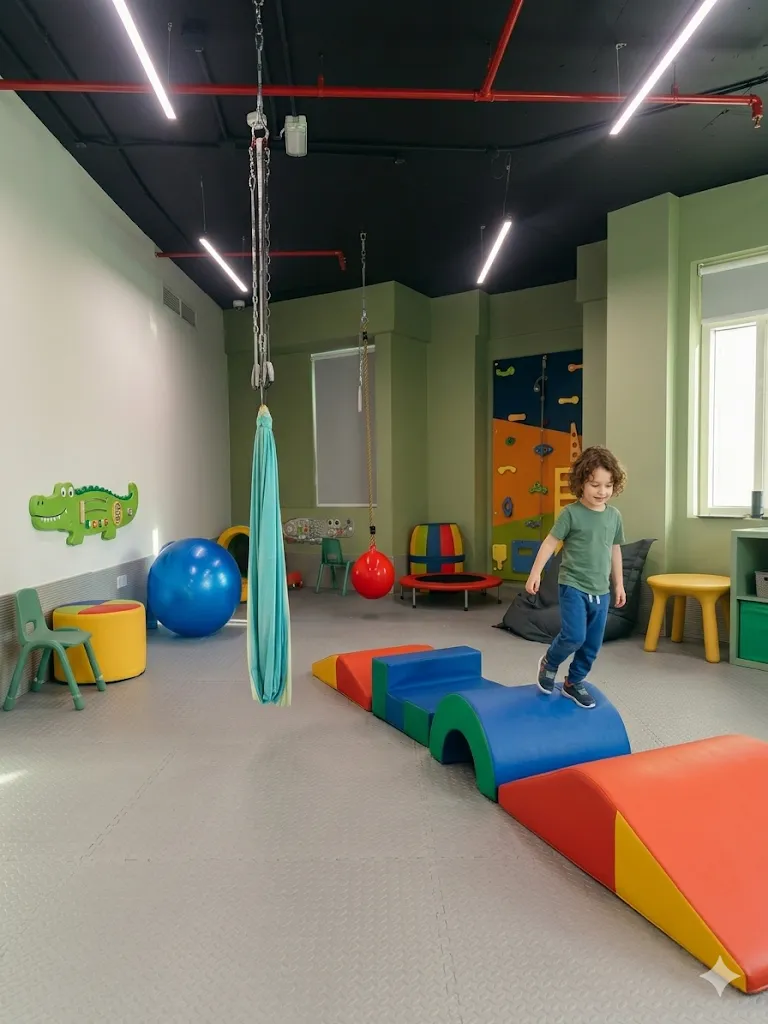

Many parents notice that their child reacts differently to everyday experiences. Some children may avoid certain clothing textures, while others cover their ears in noisy environments. Some become overwhelmed in busy settings or struggle with transitions between activities. On the other hand, some children are constantly on the move—jumping, crashing into objects, or finding it difficult to sit still. These behaviors may be related to sensory processing difficulties.
Sensory processing refers to how the brain organizes and responds to information from the environment and the body. When this process is less efficient, children may experience difficulties with attention, emotional regulation, movement, learning, and daily activities. Evidence from research and clinical practice suggests that sensory integration–based approaches can help children respond more effectively to sensory input, thereby improving their participation in everyday activities.
Occupational Therapy plays a role in identifying and addressing sensory processing challenges. A Pediatric Occupational Therapist does an assessment. They check how sensory processing affects a child’s life at home, school, and in the community.
Signs that a child may benefit from Occupational Therapy include:
- Trouble focusing or staying focused
- Lots of outbursts or meltdowns
- Sensitivity to sounds, textures, lights or movement
- Constantly seeking movement, jumping or crashing
- Poor balance and coordination
- Challenges with handwriting and fine motor skills
- Difficulty with self-care like dressing or feeding
- Struggles with transitions and changes in routine
Sensory Integration Therapy is a specialized approach within Occupational Therapy that uses play-based activities to help children process sensory information more effectively. These activities may include swinging, obstacle courses, balance tasks, climbing, fine motor activities, and sensory-rich play, all tailored to the child’s individual needs. Sensory integration interventions are child-centered and aim to improve sensory processing, emotional regulation, motor coordination, and participation in daily activities.
If you are worried about your child’s processing, attention, emotional regulation or motor development, an Occupational Therapy assessment can help. It identifies their strengths and areas that need support.
By Sidra Arshad | Lead Occupational Therapist