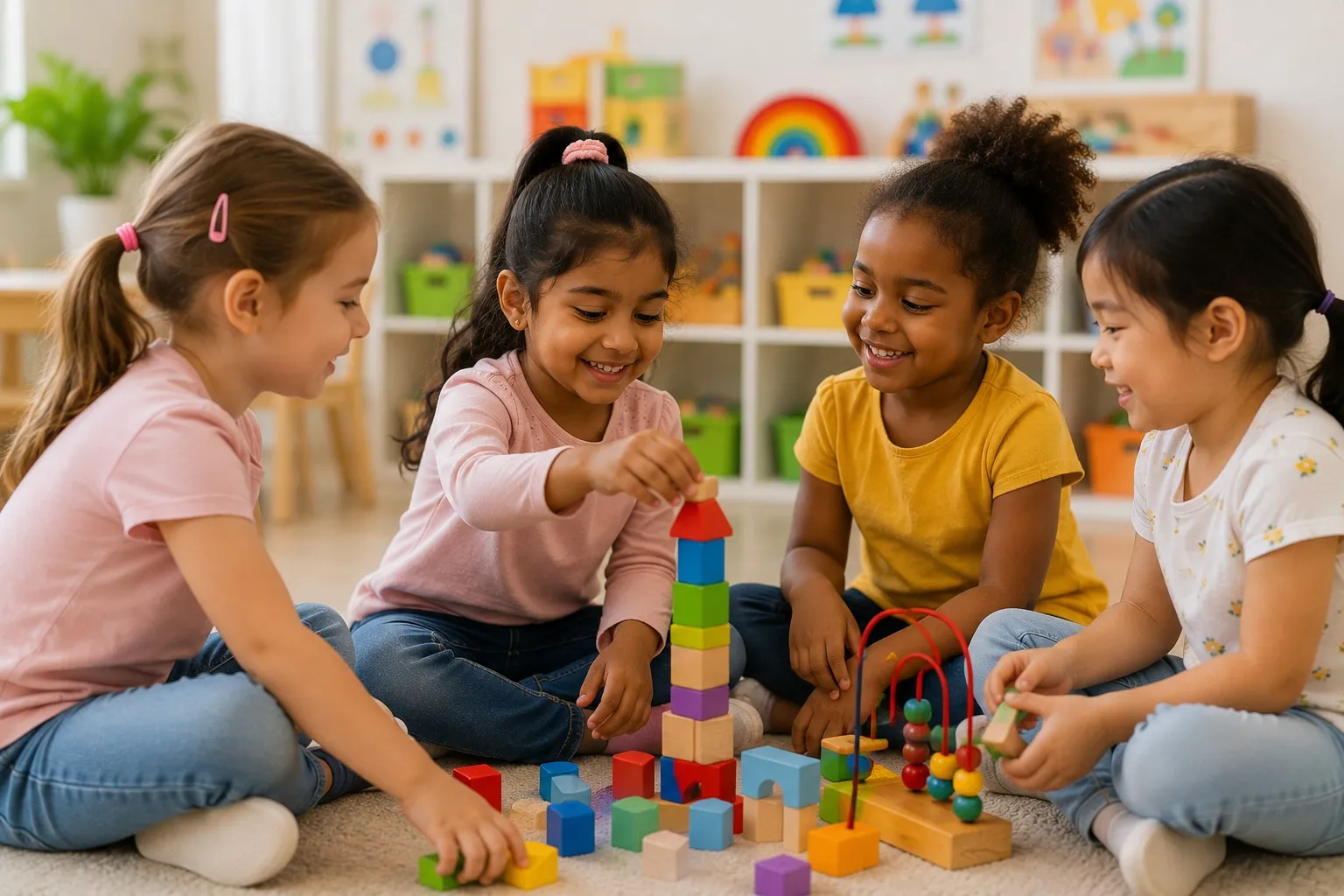

Social skills are essential for making friends, participating in school, and building confidence. However, some children may find it difficult to join group activities, share with others, take turns, or engage in meaningful peer interactions.
What is Play • I2We?
Play • I2WE is a structured play-based intervention program designed to support children in progressing from independent play (“I”) to cooperative and social play (“We”).
It helps children learn how to:
- Engage in independent play activities
- Build focus and attention through structured play
- Transition into parallel play and peer interaction
- Develop meaningful social communication skills
- Participate in group play and cooperative learning
This step-by-step approach is commonly used in ABA therapy (Applied Behavior Analysis), early intervention programs, and special education support, especially for children who need help developing social engagement and play skills.
The Transition from “I” to “We”: Developing Social Play Skills
Once a child demonstrates confidence in independent play, they are gradually supported in transitioning into social play and peer interaction.
This progression may include:
- Parallel play alongside peers
- Shared attention activities
- Turn-taking games
- Cooperative play activities
- Joint problem-solving tasks
- Structured group play sessions
During this stage, children begin to develop essential social communication skills, including:
- Sharing and waiting
- Initiating interaction with peers
- Understanding social cues
- Expressing needs and preferences
- Building early friendships
Benefits of Group Play for Social and Emotional Development
Engaging in group play activities provides children with essential developmental benefits across multiple areas.
- Social Skills Development
Children learn how to build friendships, interact with peers, and participate confidently in group settings.
- Communication and Language Development
Play encourages children to request, comment, ask questions, and engage in natural conversations, improving both expressive and receptive language skills.
- Emotional Regulation and Behavioural Growth
Children learn how to manage emotions, handle frustration, and develop coping strategies during social interaction.
- Cooperation and Teamwork Skills
Group play teaches children how to collaborate, take turns, follow rules, and work toward shared goals.
- Confidence and School Readiness
As children succeed in social play, they build confidence, independence, and readiness for school environments and structured learning.
The programme follows a progressive journey:
Level 1 – I2WE Foundations: Children learn to notice peers, share attention, take turns, and participate in simple social play.
Level 2 – I2WE Connections: Focuses on cooperative play, emotional awareness, flexible thinking, problem-solving, and group participation.
Level 3 – I2WE Community: Helps children build friendships, develop leadership skills, improve conflict resolution, and gain social confidence.
Key areas of development include:
- Social engagement and joint attention
- Turn-taking and cooperation
- Communication and conversation skills
- Emotional understanding and regulation
- Friendship building and teamwork
At Elevate Kids Clinic, our PLAY • I2WE Social Play & Relationship Skills Programme helps children develop the social, emotional, and communication skills needed for everyday success. Through therapist-led, small-group sessions, children learn and practice skills in a fun, play-based environment.
PLAY • I2WE is ideal for children who prefer to play alone, struggle with sharing or waiting, find peer interactions challenging, or need support with social confidence. Through structured, child-centred activities, children learn skills that transfer beyond the therapy room into the classroom, playground, and everyday life.